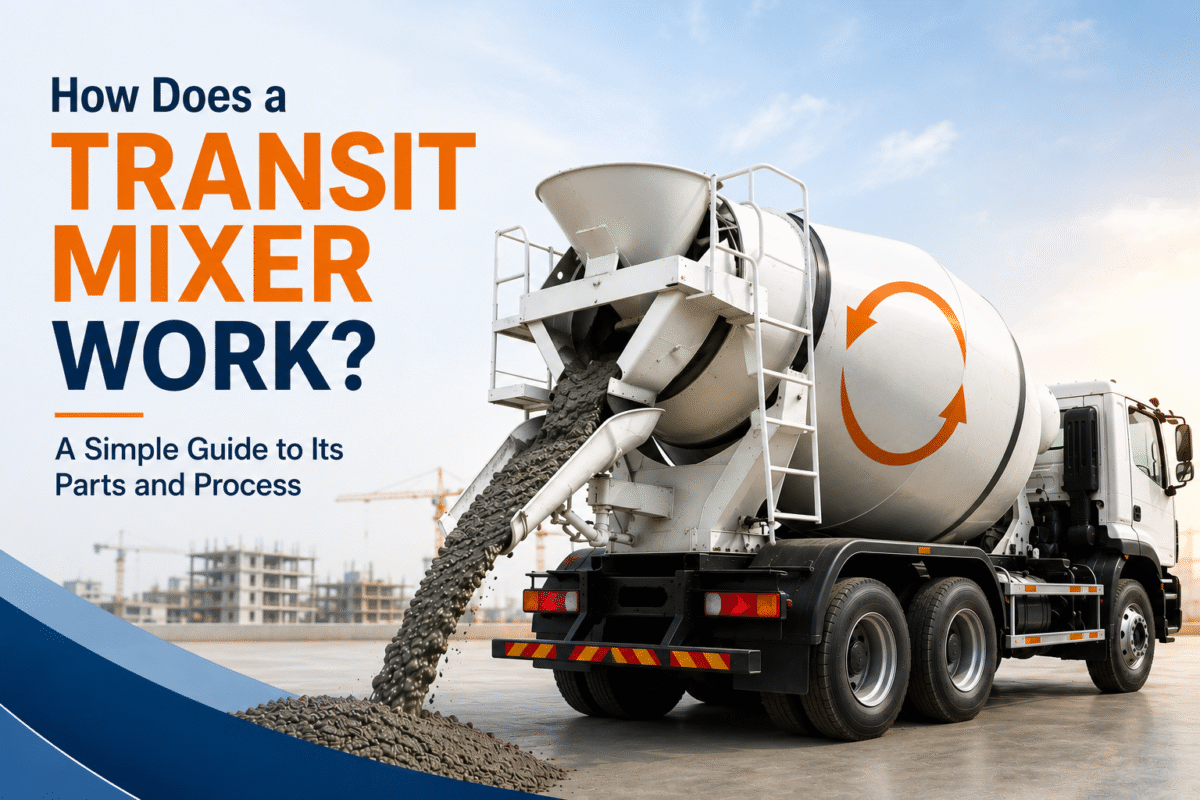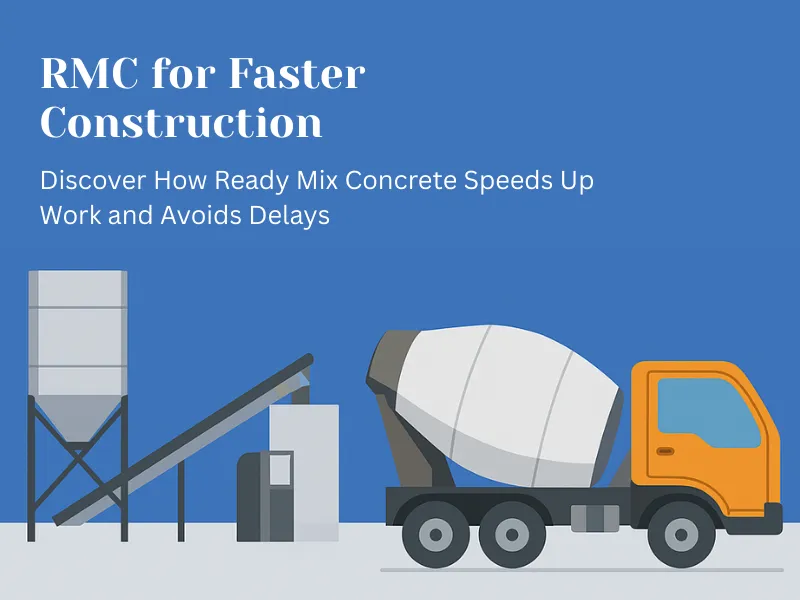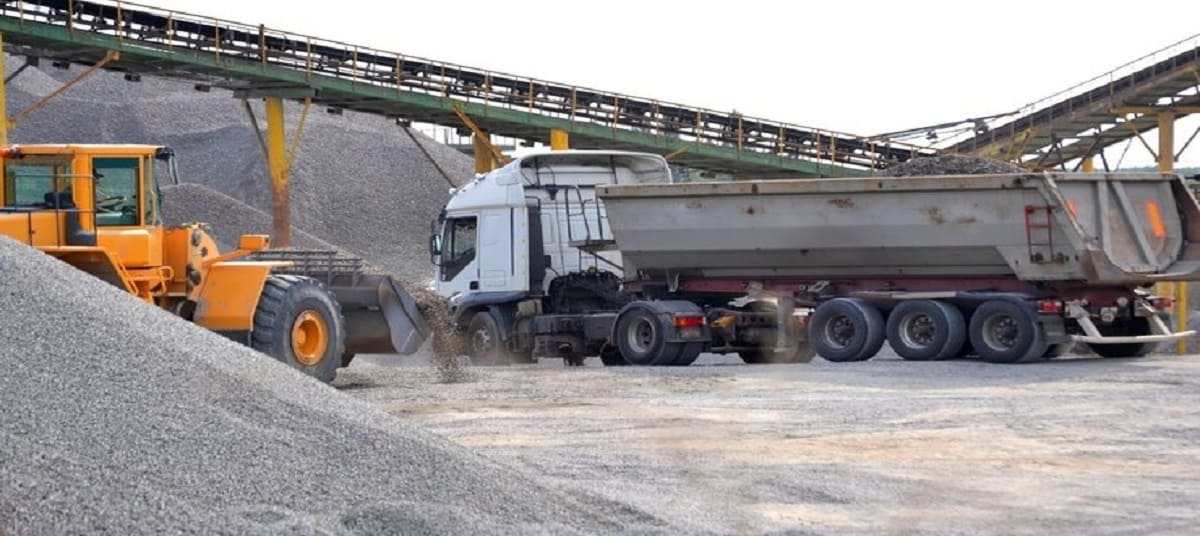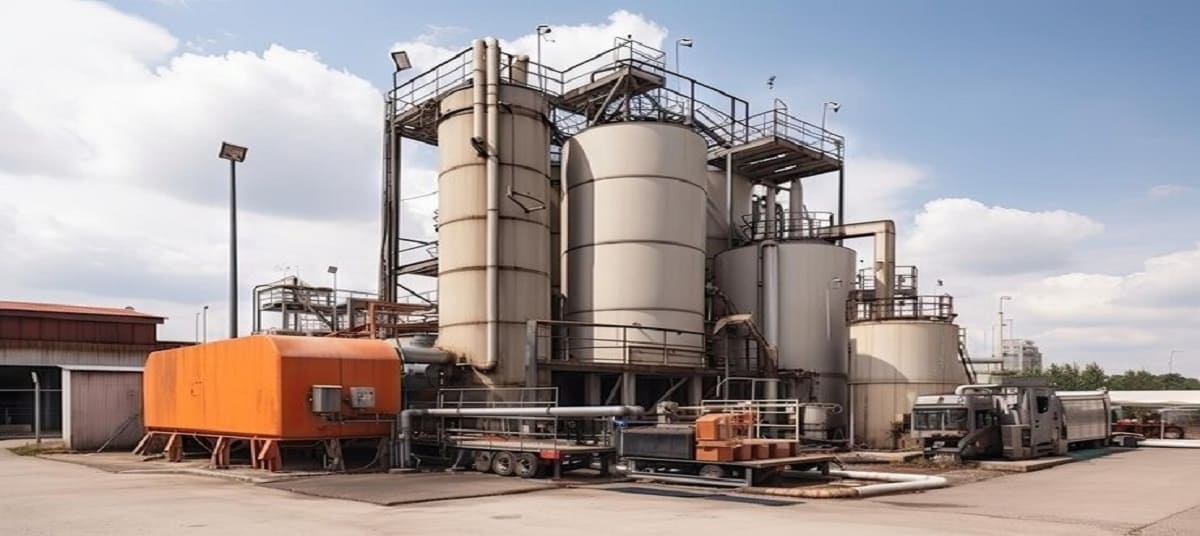
Do you ever wonder where the concrete goes once it leaves the batch plant and takes time to travel via the roads? It is the responsibility of the transit mixer to transport ready-mix concrete from the batch plant to the site of construction by keeping the concrete in continuous movement. However, concrete cannot stay inside the transit mixer for too long.
Factors such as travel distance, traffic, weather, mix composition, admixtures, and site preparation may affect the transportation process. Understanding these factors helps contractors plan concrete transportation better and reduces the chances of unnecessary delays during pouring.This is the main emphasis of Spectrum Concrete with respect to ready-mix concrete deliveries and its coordination with timing and preparation.
How Long Does Concrete Typically Stay in a Transit Mixer?
There is no definite time for all the concrete mixes. The allowable time from mixing to placing of the concrete depends on the concrete mix proportion, temperature, the presence of chemical additives, the desired workability, and other site-specific requirements of the job.
Generally, concrete mix is designed with an intent of delivering and placing within a definite time from mixing. A typical limitation in Indian concrete technology is up to two hours; however, the real requirement needs to be checked against the respective specification.
The drum of the transit mixer rotates during transportation of the concrete and maintains its evenness in the mix but does not prevent the natural hardening of concrete.
A transit mixer is designed to rotate the drum continuously and keeps the concrete agitated throughout transport. However, this process prevents segregation but does not affect the normal setting process of concrete.
Why Does Time Matter After Concrete Is Mixed?
Changes in concrete begin to happen as soon as cement, water, and other materials are put into mixing. With increasing time, workability of concrete may reduce.
Workability can be defined as the quality of fresh concrete that makes it easy for transportation, placing, compaction, and finishing. If the concrete gets hard before its placing, it will be harder to work with on the job site.
This means that transporting concrete is not just moving the mixer from one place to another. What really matters is the delivery of concrete to the job site in a suitable condition and time frame.
What Factors Can Affect Concrete Delivery Time?
Several factors can influence how long concrete remains in a transit mixer.
Distance Between the Plant and Construction Site
The longer the route, the more time will be needed for transportation. This makes routing a crucial factor when making RMC delivery plans.
Traffic and Road Conditions
Traffic jams might cause unplanned delays. This is because there may be congested streets, rerouted roads, maintenance on the streets, and peak hour traffic.
Weather and Temperature
Temperature affects the performance of fresh concrete. Heat can increase moisture loss and could also affect workability and curing. For this reason, timely transportation and placing become even more critical at hotter temperatures.
Mix Design and Admixtures
This does not mean that all concrete mixes will behave identically. Type of cement, water, amount of admixture, as well as desired amount of slump, are variables that may change the workability period. Thus, it is better to make concrete mix design based on project needs rather than have fixed workability for all cases.
Site Readiness
An unexpected problem that causes delay comes from the construction site itself. This is in case formwork, reinforcement, manpower, machinery, or the concrete placing area is not in order once the truck arrives at the site.
What Happens If Concrete Delivery Takes Too Long?
In case there is an extensive delay in transportation of concrete and at the construction site, workability of concrete may get affected.
However, delay doesn’t necessarily mean that concrete has become unfit for further use. In case the condition of concrete should be evaluated in light of mix design, time duration, workability, temperature, and project specifications.
Watering of concrete solely on the basis of stiffening of the mix is not the right course of action, except in cases when adding of water is sanctioned through a particular mix method. Such addition will definitely affect the properties of concrete.
How Does a Transit Mixer Help During Transportation?
The rotating drum of the transit mixer will help keep the freshly mixed concrete well-mixed during the transportation process. Inside the drum, there are internal blades that work to make sure the concrete does not segregate during transportation to the job site.
At the destination point, the concrete can then be discharged using the right method, which depends on the particular project at hand.
Thus, it becomes important to have coordination between the pre-blended concrete plant, transportation team, and the crew at the destination. This ensures that the process runs without too much waiting.
How Can Concrete Delivery Delays Be Reduced?
Proper planning could ensure the avoidance of most delivery problems. The amount of concrete to be transported needs to be established before it is sent out, a route for the transport should be planned in advance, and the site should be prepared before the arrival of the truck.
Working with a Ready Mix Concrete Supplier in Delhi could help the contractor plan concrete transport and delivery based on project requirements.
Where additional transport capacity is needed, Transit Mixer on Rent in Delhi could be a good option depending on the amount of concrete, the time frame of the delivery, and the entire duration of the project.
This is just a basic approach that could be used by Spectrum Concrete when preparing to deliver their ready-mix concrete.
Conclusion
Concrete delivery is not simply about delivering the mixture from the batch plant to the project site. Other aspects that are involved in the success of concrete delivery are time, temperature, traffic, mix design, workability, and site preparation. Although a transit mixer will ensure the flow of the mixture during transportation, it cannot stop concrete from deteriorating because of time. Effective scheduling and coordination can thus be beneficial in minimizing delay and ensuring effective concrete delivery. In cases where the use of ready-mix concrete is involved, it is necessary to take into consideration the above factors.
For further queries on concrete delivery, transit mixer, or your next concrete pour, Contact Spectrum Concrete.
Frequently Asked Questions
1. What is the maximum time that concrete can remain in the transit mixer?
The answer to this question will depend on the concrete composition, temperature, admixtures used, workability, and the requirements of the project. A commonly referenced time is around two hours.
2. Will the transit mixer prevent the concrete from setting?
No, because drum rotation just assists the movement and even distribution of concrete, but the setting of concrete cannot be prevented by a transit mixer.
3. Will traffic affect the delivery of ready mix concrete?
Yes, because if the traffic conditions are heavy, there may be a delay in the delivery and even pouring of the concrete at the required time according to the planned schedule.
4. Can the water be added to the concrete if it turns to be stiff during transportation?
Not at all because the addition of water may affect its properties.
5. Why should the site be ready when the transit mixer reaches there?
If this is not done, there will be unnecessary delays in the delivery and placing of the concrete, which might affect the workability and even the concrete pouring schedule.