

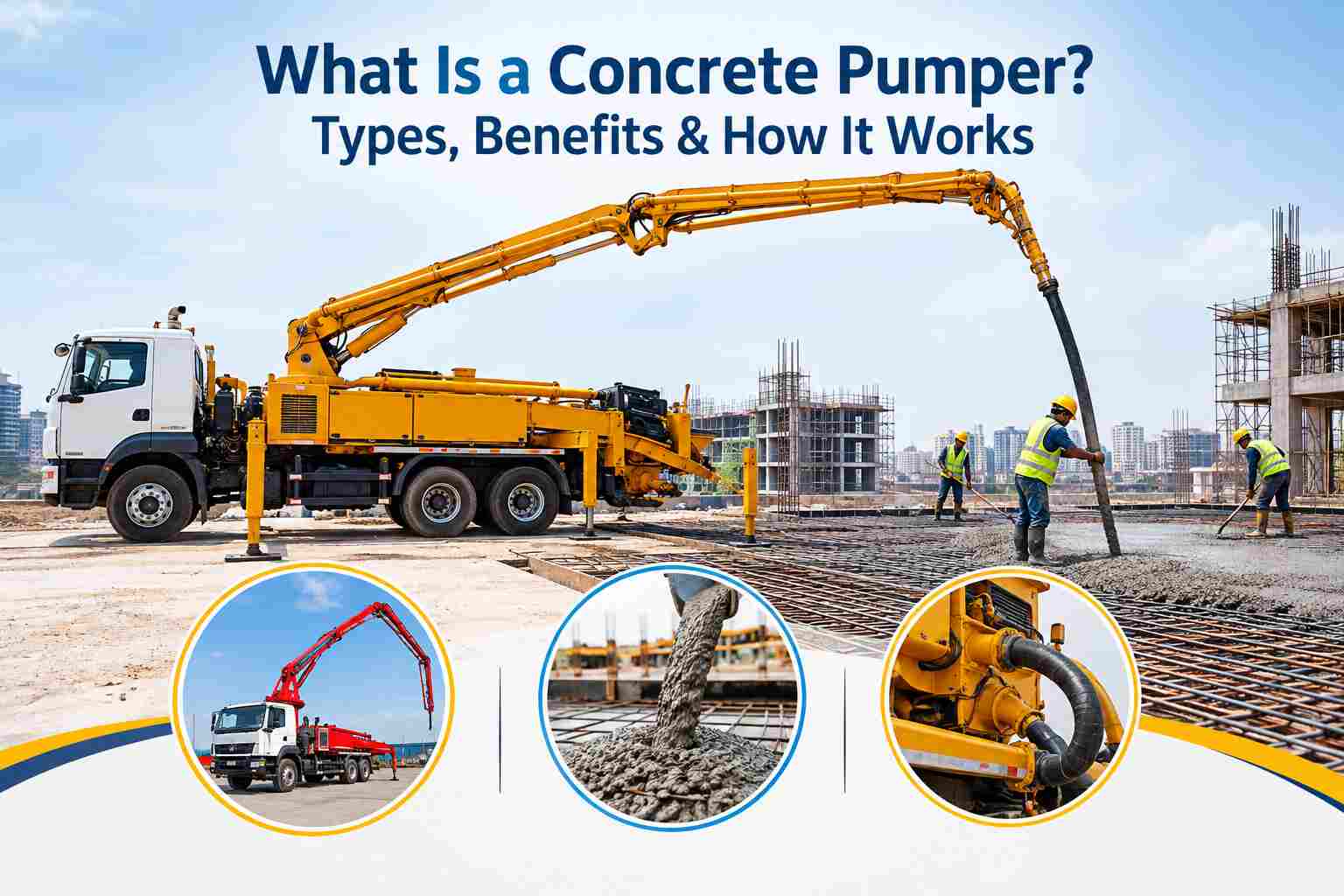
Concrete work is one of the most important parts of any construction project, but moving fresh concrete from the mixing point to the exact pouring location can become challenging. This is where a concrete pumper becomes useful. Whether you are working on a residential building, commercial project, road construction, or high-rise structure, concrete pumping helps place concrete faster and more accurately. Companies like Spectrum Concrete Pvt. Ltd. provide concrete solutions that help construction teams manage efficient concrete placement for different project requirements.
In projects where pouring of the concrete directly is not possible for any reason, most constructors go for a Concrete pump on rent in Delhi. This makes the work less manual and more efficient and helps in pouring of the concrete in smaller areas or on higher levels. Modern concrete pumps work by conveying the fluid concrete through pipes/hoses under pressure.
What Is a Concrete Pumper?
A concrete pumper is a specific construction machine that transfers fresh concrete from the mixer truck or hopper to the desired place using the pumping method. It does not involve carrying the concrete by hand through buckets and wheelbarrows but rather pushing the concrete via pipelines.
The process of concrete pumping is particularly beneficial in construction sites that face some kind of restriction. It is easier to pour concrete at high floors of the building or backyard locations using the concrete pumping technique.
The concrete pumper typically operates on the principle of hydraulic pressure. The pumping mechanism forces the concrete mixture in a continuous manner through the pipelines.
How Does a Concrete Pumper Work?
The working process of a concrete pumper is simple but highly efficient.
First, ready-mixed concrete is supplied to the hopper of the pump. Then, the concrete pumping machine takes the concrete into the cylinders and pushes it forward through pipes or hoses.
The concrete mixture is pumped by hydraulic cylinders producing the pressure inside the concrete pump. Concrete moves along the pipeline to be discharged at the end pouring point.
The concrete flow and direction are controlled by an operator as required at the construction site. It provides precise pouring of slabs, columns, foundations, walls, and other construction elements.
Quality concrete pumps operate without interruptions, which is important for a constant pace of work.
Types of Concrete Pumpers
Different constructions will need different pumping equipment for concrete. Selecting the right equipment will depend on the project’s size, distance, height, and accessibility.
1. Boom Pump
The boom pump is the most frequently employed type of concrete pump for heavy-duty construction work. This pump is fitted with an arm that can move in various directions and pour concrete with precision.
Boom pumps are ideal for:
- High-rise buildings
- Large commercial projects
- Bridges
- Industrial construction
The extended arm allows concrete to reach areas that are difficult to access using traditional methods.
2. Line Pump
A line pump uses flexible hoses and pipelines to transport concrete from the pump to the pouring area.
This type is commonly used for:
- Residential projects
- Driveways
- Small slabs
- Swimming pools
- Ground-level construction
Line pumps are practical when the concrete needs to travel horizontally over a distance or through narrow spaces.
3. Trailer Concrete Pump
The trailer pump is a mobile pumping machine that can be moved easily from place to place. It is linked with pipes and is appropriate in cases where flexibility is needed.
It is often used for:
- Smaller construction sites
- Repair work
- Long-distance concrete placement
4. Mixer Pump
The mixer pump performs both mixing and pumping jobs in one single unit. It proves to be useful when transporting ready-mixed concrete alone is hard.
This type can save time because the concrete preparation and pumping process happen together.
Benefits of Using a Concrete Pumper
Using a concrete pumper provides several advantages compared with traditional concrete placement methods.
Faster Concrete Placement
Manual concrete transportation takes more time and requires more workers. The concrete pump ensures that concrete is delivered continuously, hence making the process of concreting quicker.
This is very advantageous for big projects since time delay will lead to additional expenses of labor and machines.
Better Accuracy
Concrete pumps allow workers to place concrete exactly where required. This reduces unnecessary spreading and helps maintain better control over the construction process.
Reduced Labour Requirement
Carrying heavy concrete manually requires multiple workers. A concrete pumper reduces physical effort and allows workers to focus on finishing and other important tasks.
Access to Difficult Areas
Some construction locations are challenging to reach with traditional methods. A pumping system can transport concrete through pipelines to narrow spaces, higher floors, and restricted areas.
Less Concrete Wastage
Controlled pumping reduces wastage in material use since the concrete is delivered directly to where it should be rather than transported several times.
Why Choose a Professional Concrete Pumping Service?
The importance of selecting the correct concrete pumping company lies in the fact that the equipment and its operation greatly impact the project’s efficiency.
A reliable service provider understands factors such as:
- Concrete mix consistency
- Required pumping distance
- Site conditions
- Equipment selection
- Safety requirements
If you are looking for reliable concrete solutions in Delhi, it is important to choose a service provider with experience, quality equipment, and a strong understanding of construction requirements. A trusted concrete service company can help you select the right pumping solution based on your project size, location, and concrete placement needs.
Along with pumping services, choosing a trusted Ready mix concrete supplier in Delhi can also improve project quality because ready-mix concrete provides better consistency and saves preparation time at the construction site.
Concrete Pumper vs Traditional Concrete Pouring
The conventional method of pouring concrete involves a lot of manual effort. Concrete is carried manually with the help of buckets, wheelbarrows, or any other means.
The concrete pumper provides an advanced alternative, where the transfer of concrete is done straight from the mixing site to the pouring site.
Here is a simple comparison:
| Concrete Pumper | Traditional Pouring |
| Faster concrete placement | Slower process |
| Requires fewer workers | Needs more manual labour |
| Suitable for difficult locations | Limited accessibility |
| Better control over placement | More chances of material handling issues |
For modern construction projects, pumping technology provides better efficiency and convenience.
When Should You Use a Concrete Pumper?
A concrete pumper is recommended when:
- The construction site has limited space
- Concrete needs to reach higher floors
- Large quantities of concrete are required
- Faster completion is important
- Manual transportation is difficult
For small projects, it might suffice to have a line pump, but for large-scale commercial projects, it becomes necessary to use boom pumps.
How to Select the Right Concrete Pump?
Before choosing a concrete pump, consider:
Project Size
Large projects require powerful pumps, while smaller projects may need compact equipment.
Pumping Distance
The horizontal and vertical distance between the concrete source and pouring area affects pump selection.
Site Accessibility
Check whether the equipment can easily reach and operate at the construction location.
Concrete Type
The concrete mix design and consistency must be appropriate for the pump.
Collaborating with professional people ensures that there is no delay in concrete placement.
Conclusion
A concrete pumper has become an important machine in modern construction because it makes the transportation and placement of concrete quicker, smoother, and more efficient. This equipment is useful for different types of projects where reaching the required pouring location becomes challenging.
Different types of pumps, including boom pumps, line pumps, trailer pumps, and mixer pumps, are designed for specific construction needs. Selecting the right equipment based on project requirements can improve productivity and help reduce unnecessary costs.
For reliable concrete solutions, Spectrum Concrete Pvt. Ltd. helps builders and contractors manage their concrete requirements with professional support and quality services. Whether you need large-scale construction assistance or a smaller project solution, combining professional pumping services with a trusted Ready mix concrete supplier in Delhi can help achieve better construction results.
If you are planning a project and need flexible equipment access, choosing a Concrete pump on rent in Delhi can be a practical option for completing concrete work smoothly, while ensuring proper placement and better project efficiency.