The workings of the Transit Mixer are not limited to being just any regular truck for transporting concrete. It works towards keeping your fresh concrete continuously mixed and agitated throughout the transportation from the batching plant to the construction site. So, what exactly is the process by which this is accomplished? Well, that depends largely upon the components in the form of a rotating drum, mixing blades, loading apparatus, and a well-controlled discharging process. Right from the time when concrete gets loaded onto the transit mixer up until its discharge at a construction site, each of these processes plays an important role. At Spectrum Concrete, we appreciate the significance of synchronizing the processes for proper handling of the ready-mix concrete as per the project.
How Does a Transit Mixer Work?
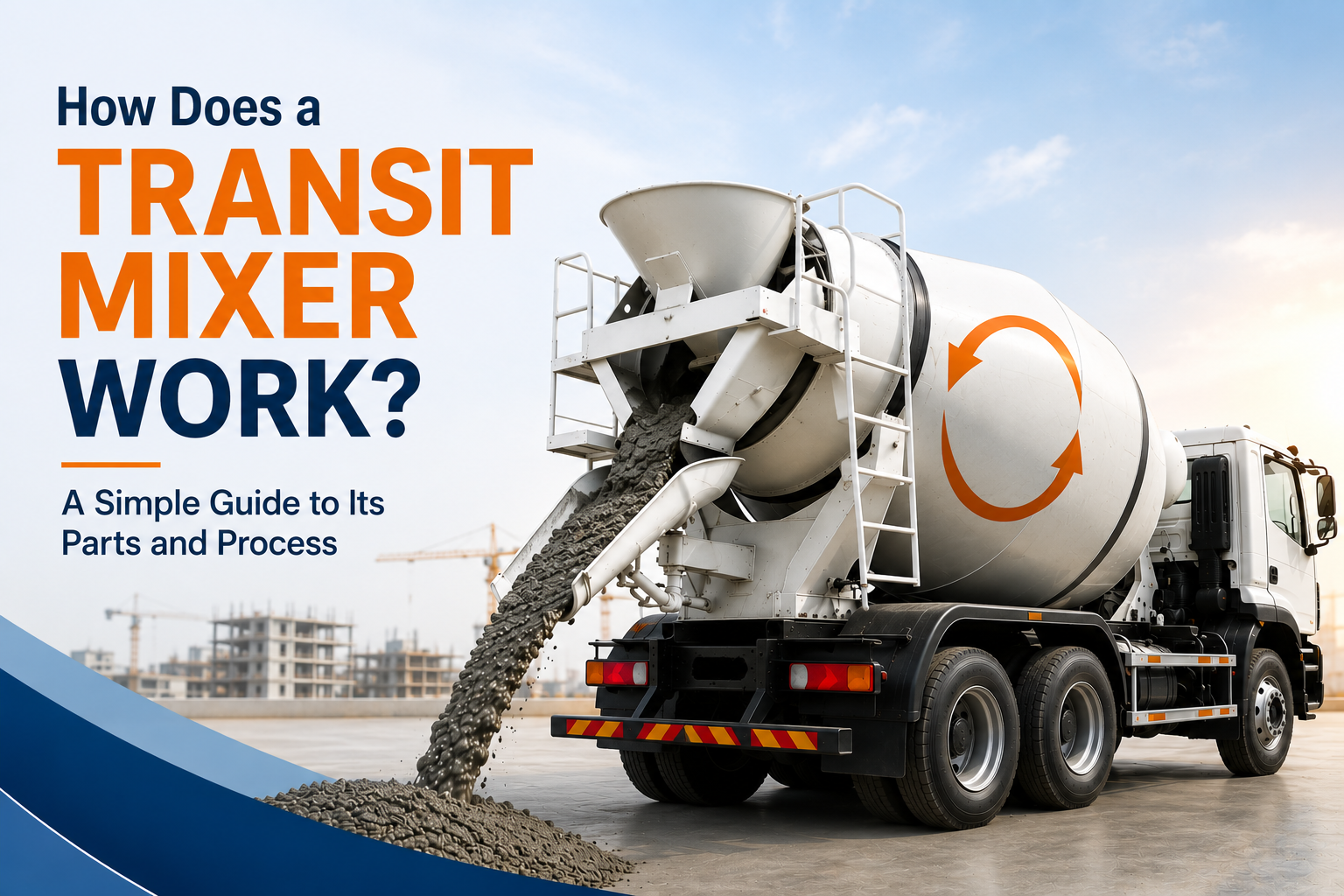
A transit mixer works by continuously mixing concrete by rotating the drum continuously during transportation from the batching plant to the construction site. The drum has inner blades for mixing or agitating the concrete as it is being transported.
The basic process is:
Batching → Loading → Drum Rotation → Transportation → Discharge → Concrete Placement
The components of concrete are weighed and proportioned in accordance with the approved mix design. The fresh concrete is placed inside the rotating drum. While it is being transported, the drum rotates constantly at a particular speed that helps maintain the uniformity of the mixture.
As soon as the drum arrives at the construction site, its operation is switched to allow the discharge of concrete.
What Are the Main Parts of a Transit Mixer?
Understanding the main transit mixer parts makes it easier to understand how the equipment works.
Mixing Drum
This is the large cylindrical drum, which holds the fresh concrete and moves during transport.
Mixing Blades
Some blades are fitted within the drum. Their design ensures that the concrete is moved from one side of the drum to another while moving.
Hydraulic Drive System
The hydraulic drive ensures the mixing drum can rotate by providing the necessary energy for rotation. It enables manipulation of the speed and direction of rotation.
Truck Chassis and Engine
The mixing drum is mounted on a truck chassis. The engine supplies the energy that drives the truck from the batching plant to the construction site.
Discharge Chute
This is used to guide the concrete to be discharged from the mixing drum. This is based on the site arrangement and equipment to be utilised.
What happens during the loading of the concrete into the Drum?
Before the loading process, the materials necessary for the production of the desired concrete mix are measured as per the mix design. It includes cement, water, fine aggregates, coarse aggregates, and any other desirable admixtures.
The fresh mix is then poured into the drum. The rotation of the drum helps to move the materials inside through the blades that are found in the drum instead of keeping the materials stationary.
It is significant due to the fact that concrete has different materials with varying properties. Agitation is crucial for maintaining consistency.
For Delhi area projects and their surrounding areas, it becomes important when there are several mixer trips involved in the process.
What Role Does the Drum Play in Transporting Concrete?
The drum is not just transporting the concrete; its rotation is an integral part of ensuring that the mixing process continues.
The drum will either agitate or mix the concrete, depending on how it is operating. This will prevent segregation and ensure that the concrete remains uniform in transit.
However, rotation of the drum does not stop the natural changes that occur in concrete. Concrete has to be transported, unloaded, and used while adhering to the recommended mix design requirements.
To understand more about what can affect concrete delivery time, check out our guide to concrete transportation and delivery.
What Role Does a Transit Mixer Play in Ensuring the Consistency of the Concrete?
A transit mixer ensures consistency in the prepared concrete by having the drum rotate continuously, as well as the mixing blades inside.
This helps to keep the freshly made concrete from just sitting idle during transportation, and it also helps in reducing segregation if the equipment is run properly.
Nonetheless, the mixer does not do everything; the performance of the ready-mixed concrete will depend on several factors, including mix proportions and quality, proper batching, transport, construction preparation, concrete placement and compacting, and curing.
For this reason, Spectrum Concrete does not separate the concrete transport from the overall ready-mixed concrete process.
Where Does Ready Mixed Concrete Originate From?
Before the transit mixer machine begins its journey, concrete is typically manufactured in a batching plant.
Then the concrete is loaded into the concrete mixing machine and taken to the construction site.
For projects that require the delivery of RMC in coordination with production, a Ready mix concrete supplier in Delhi can help when you plan your concrete demands, quantities and schedules for the delivery.
Also, Spectrum Concrete highlights the importance of coordination of concrete production and its transportation, as they require proper coordination to deliver the concrete.
What Happens When the Transit Mixer Arrives at the Construction Site?
The answer to this question will depend on the specific layout of the construction project site.
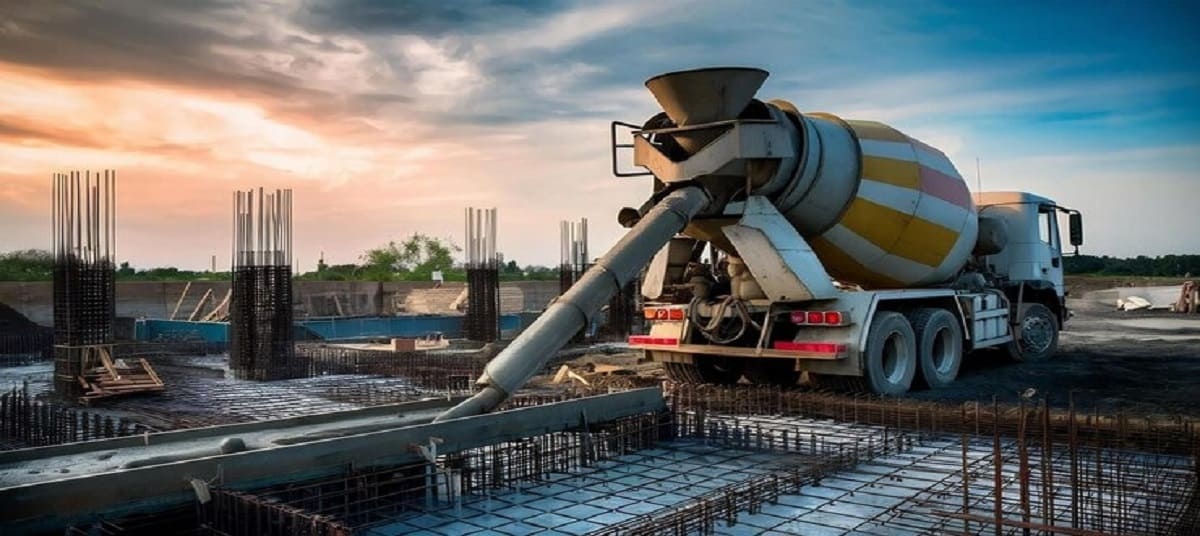
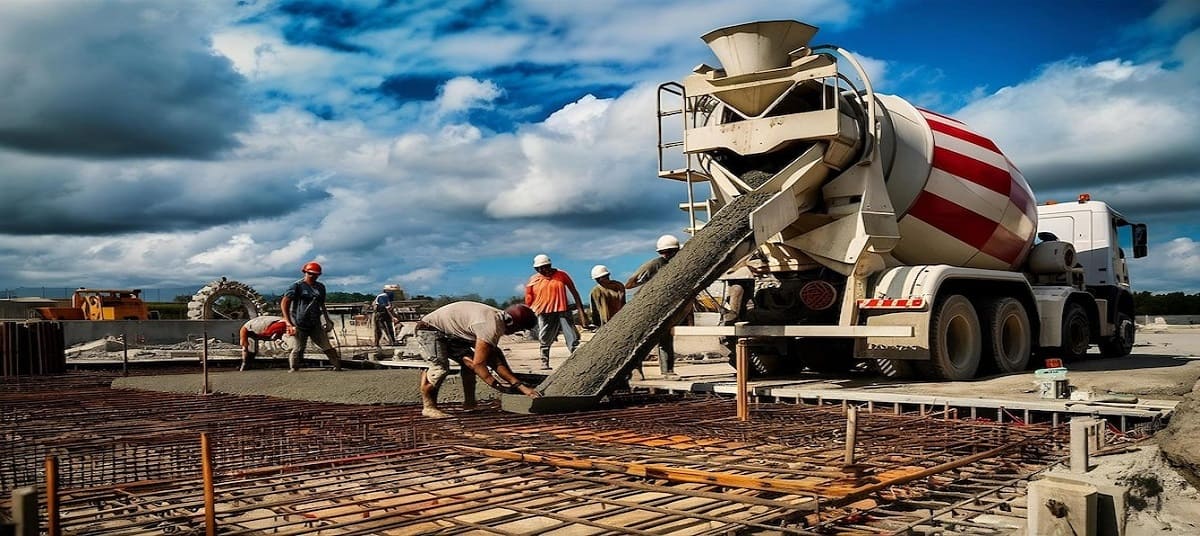
If the placement area is close and accessible, the concrete can be discharged directly out of the mixer. When there is a need for transporting concrete in vertical, horizontal, or inaccessible areas, pumping equipment may be used.
When there is a need for flexibility in placing the concrete, a Concrete pump on rent in Delhi may become an option for the particular project.
The important thing to understand is that transportation and concrete discharging are the responsibility of the transit mixer, while other machinery is responsible for the concrete placement process.
Why is Proper Transit Mixer Operation Important?
Proper operation helps maintain consistency in concrete handling operations, preventing unnecessary difficulties. The transit mixer should be properly loaded, transported, and discharged based on the right operational processes.
Furthermore, the construction team has to make sure that everything is ready before the arrival of the transit mixer.
All of these activities ensure that the entire operation, from the batching plant up to the construction site, is smooth and manageable.
Conclusion
The transit mixer plays an important role in ready-mix concrete operations since it bridges the gap between the manufacturing of the concrete and its delivery to the construction site through its drum, blades, hydraulics, and unloader components. After you learn about the basics of concrete handling, you realise the importance of coordination among the batching plant, the mixer, and the site team. The process that starts with loading the concrete and ends with delivering it at the project site plays an integral part in improving the construction process for the project. Spectrum Concrete encourages such a coordinated approach to ready-mix concrete operations.
In case you have any questions regarding your concrete needs and requirements, you may reach us by contacting us.
Find Spectrum Concrete on Google
If you want to check the business location, local information, and customer reviews, you can also visit Spectrum Concrete on Google.
Frequently Asked Questions
What is the main purpose of a transit mixer?
The main purpose of a transit mixer is to transfer ready-mix concrete through the rotation of the drums.
Does a transit mixer either mix concrete or transport it?
Either it mixes the mixture or agitates it, based on the drum’s operation and the preparation of concrete. The drum and internal blades ensure that the mixture remains mixed during transportation.
What are the key components of a transit mixer?
These include the mixing drum, blades inside the drum, hydraulic driving system, vehicle itself, its engine, water system, and discharge chute
Can the concrete be transferred directly from the mixer to the pumping system?
Depending on project requirements, concrete could be discharged from the mixer straight to the pumping equipment and transported to a certain place for placement.
Why does the drum continue rotating when the mixer moves?
The rotation of the drum helps ensure that the fresh concrete stays in motion and maintains consistency. However, it does not stop the natural setting process of concrete.